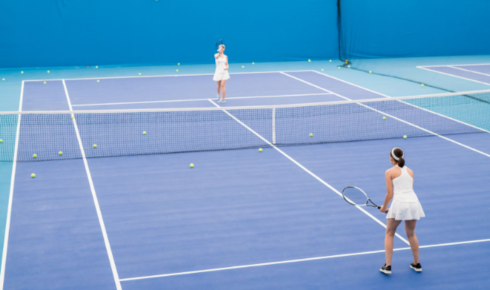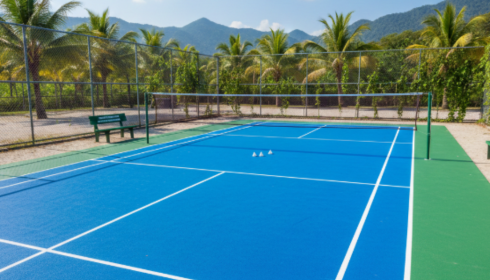
Badminton is one of the fastest indoor and outdoor sports, where footwork, grip, and surface response directly impact performance and player safety. Yet, many badminton courts—especially in schools, academies, housing societies, and multi-sport facilities—suffer from avoidable flooring issues. Most of these problems arise not from usage, but from poor badminton court flooring choices, incorrect materials, or improper construction practices.
This guide breaks down the top 5 badminton court flooring problems commonly seen on Indian courts and explains how to avoid them using the right badminton court material and construction approach. The focus remains on flooring—because no matter how skilled the player, a faulty surface will always hold the game back.
1. Slippery Surface and Loss of Grip
One of the most frequent complaints in badminton courts is slipperiness, especially during fast lateral movements. This problem is common in courts where glossy paints, tiles, or non-textured coatings are used instead of professional badminton court surface material.
Why it happens
- Use of generic floor paint instead of badminton floor material
- No silica sand or texture additive in the top layer
- Dust accumulation on low-quality surfaces
- Moisture retention in outdoor badminton court flooring
How to avoid it
The solution lies in synthetic badminton court flooring systems designed specifically for sports traction. A proper synthetic flooring for badminton court uses:
- Controlled texture for grip without skin abrasion
- Anti-skid acrylic layers
- Consistent bounce and foot response
Professionally designed badminton court flooring balances grip and smoothness, ensuring player confidence even during intense rallies.
2. Surface Cracks and Early Flooring Failure
Cracks on the playing surface not only look bad but also affect shuttle movement and increase injury risk. Many facilities experience cracks within a year or two of construction.
Why it happens
- Poor base preparation
- Low-grade badminton court material
- Ignoring expansion joints
- Applying thin coating layers to cut costs
How to avoid it
Durability starts from the base. Proper badminton court construction details include:
- Well-cured concrete or asphalt base
- Crack-bridging resurfacer layers
- Flexible synthetic acrylic systems
A high-quality badminton court synthetic flooring absorbs minor base movement instead of transferring cracks to the surface, extending court life significantly.
3. Uneven Bounce and Dead Spots
In badminton, shuttle behavior must remain predictable across the court. Uneven bounce or dead zones disrupt gameplay and frustrate players.
Why it happens
- Uneven leveling of the base
- Inconsistent application of badminton flooring layers
- Use of mixed or incompatible materials
How to avoid it
Uniformity is achieved only with system-based badminton court flooring, not single-layer solutions. A proper system includes:
- Primer for bonding
- Resurfacer for leveling
- Multiple color coats for consistency
Using standardized badminton court surface material ensures equal response across the entire playing area.
4. Weather Damage in Outdoor Badminton Courts
Outdoor badminton courts are growing in demand, but many fail prematurely due to weather exposure. Fading, peeling, and surface hardening are common issues.
Why it happens
- Non-UV-resistant badminton floor material
- Water seepage into layers
- Incorrect slope and drainage planning
How to avoid it
For outdoor badminton court flooring, the surface must be engineered for Indian weather conditions. The right solution includes:
- UV-stable synthetic badminton court systems
- Water-resistant acrylic layers
- Proper slope and drainage integration
A professionally installed synthetic flooring for a badminton court maintains color, texture, and performance even under harsh sun and monsoon cycles.
5. High Maintenance and Frequent Repairs
Many facility owners assume badminton courts require constant upkeep. In reality, frequent repairs often signal a poor flooring choice, not heavy usage.
Why it happens
- Cheap materials that wear quickly
- Non-sports coatings that lose texture
- Incompatible repair products
How to avoid it
Low-maintenance courts start with the right badminton court flooring system. Modern synthetic badminton court surfaces:
- Resist abrasion from shoes
- Retain texture longer
- Allow easy resurfacing instead of full replacement.
Choosing durable badminton court material reduces lifecycle cost and keeps the court playable year after year.
Why Top Flooring–Focused Content Matters
Most badminton court issues begin with the flooring, yet many resources overlook it. Top flooring-related content focuses on what truly affects performance—badminton court flooring quality, material selection, surface behavior, and construction details. By explaining how synthetic badminton court systems perform in real playing and weather conditions, flooring-focused content helps decision-makers avoid costly mistakes and build courts that remain safe, consistent, and durable over time.
Final Thoughts
Most badminton court flooring problems are not unavoidable failures—they are the result of choosing the wrong badminton court flooring or cutting corners during construction. By focusing on synthetic badminton court systems, correct materials, and proper layering, facilities can achieve:
- Better grip and safety
- Consistent playability
- Longer surface life
- Lower maintenance costs
Whether for indoor halls or outdoor installations, investing in the right badminton court flooring is the foundation of a successful court—and the key to keeping players confident on every rally.