
The Kind of Water You Live With Quietly Shapes Your Home More Than You Think
Water doesn’t usually get much attention.
It’s just there—running through taps, filling kettles, powering showers, washing clothes. You don’t really think about it unless something goes wrong. And even then, it’s rarely dramatic.
It’s subtle.
A taste that feels slightly off. A film left behind on dishes. Soap that doesn’t quite behave the way it should. Small things, easy to overlook… until they start repeating.
And once they do, you begin to notice.
When Water Starts Telling Its Own Story
The interesting thing about water is that it leaves clues.
You might see mineral buildup around your faucets or showerhead. Your skin might feel dry even after using good products. Your appliances—like your washing machine or dishwasher—might not perform as efficiently as they once did.
These aren’t random issues.
They’re connected.
And often, they point toward the composition of your water—what’s dissolved in it, what it’s carrying with it every time it flows through your home.
The Role of Hard Water (Even When You Don’t Realize It)
Hard water is one of the most common culprits behind these everyday frustrations.
It contains minerals like calcium and magnesium, which aren’t harmful but can be incredibly persistent.
They build up slowly. On surfaces, in pipes, inside appliances.
That’s why many households turn to commercial and residential water softeners—not because something is broken, but because something could be better.
Softened water behaves differently. It lathers more easily. It leaves fewer residues. It simply feels smoother.
And once you get used to it, it’s hard to go back.
Drinking Water Is a Different Conversation
While hard water affects your home in general, drinking water is a more personal matter.
It’s not just about performance—it’s about taste, clarity, and confidence.
You want to feel comfortable with what you’re putting into your body.
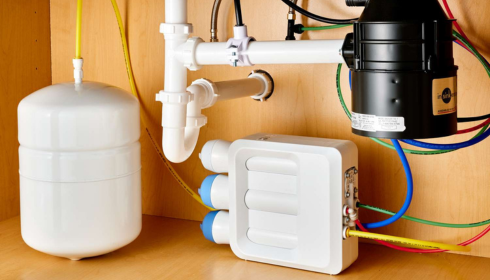
That’s where reverse osmosis drinking water systems come into the picture.
They go beyond basic filtration, removing a wide range of impurities at a very fine level.
The result? Water that tastes clean, crisp, and noticeably different.
For many people, it’s one of the first upgrades they make—and one of the most appreciated.
Looking at the Bigger Picture
But here’s where things get interesting.
Once you improve one aspect of your water, you start to think about the rest.
If your drinking water can be better, what about the water you shower in? The water you cook with? The water running through your entire home?
That’s when the idea of a water purification system for home begins to make sense.
It’s not about fixing a single issue. It’s about creating consistency across everything.
And for households dealing with multiple water concerns, that broader approach can be incredibly effective.
Why There’s No One-Size-Fits-All Solution
One of the biggest misconceptions about water treatment is that there’s a single “best” solution.
There isn’t.
Water quality varies depending on where you live, your water source, and even your plumbing.
What works perfectly for one home might not be necessary for another.
That’s why understanding your specific situation matters.
Not in a technical, overwhelming way—but in a practical sense.
What are you noticing? What bothers you most? What would you like to improve?
Those answers guide everything else.
The Changes You Notice Over Time
Improving water quality doesn’t usually come with a dramatic reveal.
There’s no moment where everything suddenly feels different.
Instead, the changes are gradual.
Your coffee tastes better. Your laundry feels softer. Your fixtures stay cleaner for longer. Your skin feels less dry after a shower.
These are small improvements.
But together, they create a noticeable shift in how your home feels.
And that’s often what people are really looking for—not perfection, just a better everyday experience.
Keeping It Simple (Because It Should Be)
It’s easy to overthink water solutions.
There are so many options, so many systems, so many opinions.
But it doesn’t have to be complicated.
Start with what you notice. Focus on what matters most to you.
Maybe it’s the taste of your drinking water. Maybe it’s the buildup on your fixtures. Maybe it’s how your water feels overall.
From there, you can take steps that make sense—without overcomplicating the process.
A Shift That Stays With You
What’s interesting is how your perspective changes once you start paying attention to your water.
It’s no longer something you take for granted.
You notice how it behaves, how it affects your daily routines, how it shapes your home in ways you hadn’t considered before.
And that awareness tends to stick.
Not in a way that feels overwhelming—just in a way that feels… intentional.
A Thought to Leave You With
If you’ve ever paused, even briefly, to question your water, it’s probably not random.
It’s a small signal.
Not a warning, not a problem—just a moment of awareness.
You don’t need to act on it immediately. You don’t need to install anything overnight.
But understanding your water—what’s in it, how it affects your home—is a worthwhile step.
Because in the end, water isn’t just something you use.
It’s something you live with.
And sometimes, giving it a little more attention can quietly improve more parts of your life than you expect.