
Why Smart Businesses Are Rethinking Their Water Systems
Water is one of those things most businesses rarely think about—until something goes wrong. It’s there when you open a tap, powering equipment, cooling machines, cleaning tools, or running entire production lines. But behind that simple flow often lies a complicated reality. Minerals, contaminants, and inconsistent quality can quietly affect operations in ways many companies don’t realize at first.
Over the past decade, businesses across industries—from manufacturing plants to laboratories and restaurants—have started paying closer attention to how water quality impacts their daily work. The conversation has shifted from “Is water available?” to a more thoughtful question: “Is our water actually good enough for what we do?”
That shift has led many organizations to explore advanced purification systems, especially commercial reverse osmosis, which has become something of a quiet workhorse in modern water treatment.
The Growing Importance of Clean Process Water
It’s easy to underestimate the role water plays in commercial environments. In homes, the biggest concern might be taste or hardness. In businesses, however, water quality can influence productivity, equipment lifespan, and even product consistency.
Think about a brewery, for example. Water chemistry can subtly change the taste of a beer batch. In manufacturing facilities, mineral buildup can damage expensive machinery. Laboratories require ultra-pure water to ensure experiments remain accurate.
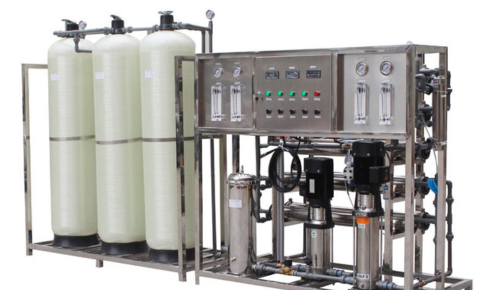
That’s where advanced filtration solutions come into the picture. Among the most widely used technologies today is commercial reverse osmosis, a process that pushes water through a specialized membrane to remove dissolved salts, minerals, and contaminants. The result? Exceptionally clean water that’s reliable and consistent.
Businesses that rely on precise water quality—food processing plants, pharmaceutical labs, electronics manufacturing facilities—often consider reverse osmosis systems less of a luxury and more of a necessity.
And once you see how many industries depend on it, the popularity makes perfect sense.
When Purity Needs to Go Even Further
For some operations, even reverse osmosis isn’t the final step. Certain environments demand water that is almost completely free of ions or electrical conductivity.
Laboratories, power plants, and semiconductor manufacturers fall into this category. In these settings, extremely pure water prevents chemical reactions or interference that could ruin delicate processes.
That’s where commercial deionization systems enter the picture. Deionization technology removes charged particles—like calcium, sodium, or chloride ions—from water through specialized resin beds. The result is water that’s about as close to chemically pure as most industries can practically achieve.
Interestingly, many facilities combine reverse osmosis with deionization to create a multi-stage purification process. The first stage removes most contaminants, while the second stage polishes the water to an even higher purity level.
It’s a bit like filtering coffee twice. Maybe it seems excessive at first, but for industries that depend on consistency, it can make all the difference.
Maintenance: The Part Nobody Talks About
Installing a water treatment system is only half the story. Like any sophisticated equipment, these systems require maintenance to keep running smoothly.
Filters must be replaced. Membranes need monitoring. Mineral buildup has to be managed. Without proper care, even the best purification systems can slowly lose efficiency.
That’s why many businesses rely on service providers to handle ongoing upkeep. Some providers offer routine inspections, performance checks, and even remote monitoring tools to ensure systems stay in peak condition.
And then there’s another surprisingly important piece of the puzzle: water softening support.
Many facilities integrate softeners before reverse osmosis units to reduce scaling and extend system life. But softeners rely on salt, and keeping those tanks filled isn’t always convenient for busy teams.
This is where salt delivery services become quietly valuable. Instead of employees hauling heavy bags of salt through warehouses or mechanical rooms, scheduled deliveries ensure softeners stay topped up automatically.
It’s one of those small operational improvements that seems minor—until you realize how much time it saves.
Choosing the Right Water Treatment Setup
Not every business needs the same type of water purification system. The right setup depends on several factors, including water source, industry requirements, and daily usage.
Companies typically consider questions like:
- How much water do we use each day?
- What contaminants exist in our local water supply?
- Does our industry require ultra-pure water standards?
- How critical is equipment protection?
A restaurant, for instance, might focus on improving taste and protecting dishwashers from scale buildup. Meanwhile, a pharmaceutical lab could require highly controlled purification processes to meet strict regulatory standards.
Because of these differences, water treatment systems are often customized. Engineers and water specialists evaluate incoming water quality, calculate system capacity, and design solutions that match operational needs.
It’s a bit like tailoring a suit. Off-the-rack systems exist, sure—but the best performance usually comes from something built with your specific environment in mind.
The Quiet Efficiency of Better Water
When businesses upgrade their water systems, the benefits often appear gradually rather than all at once. Equipment runs more smoothly. Maintenance costs decrease. Production becomes more consistent.
Employees may not always notice the change immediately, but operations teams usually do.
Better water quality reduces scale buildup, improves energy efficiency in heating systems, and protects sensitive machinery. Over time, those improvements can translate into substantial savings—not just financially, but also in reduced downtime and fewer operational headaches.
And perhaps that’s the real takeaway here. Water might seem simple, but the systems behind it are anything but.
Businesses that invest in smart water treatment strategies often discover something interesting: when the water is right, everything else tends to run a little better too.
It’s not flashy technology. It doesn’t usually make headlines. But in the background—quietly, steadily—clean water keeps industries moving forward.