
Some of the most useful improvements you can make to your home happen in places nobody really sees. The basement, utility room, or small area surrounding the main water supply line might not seem particularly interesting, but it’s where you can address several water quality concerns before they become everyday frustrations.
For homeowners across Moorhead, Fargo, and neighboring communities, water treatment at the point of entry offers a practical way to improve incoming water before it reaches household fixtures and appliances.
Instead of dealing with unwanted particles or unpleasant odors at individual faucets, centralized treatment tackles identified concerns closer to their source. It’s an approach worth understanding, particularly if you’re tired of managing several separate filtration devices.
Following the Journey of Water Through Your Home
Every time you turn on a faucet, start the washing machine, or run a bath, water travels through your property’s plumbing network.
What happens near the beginning of that journey can influence the water delivered throughout your home.
Appropriately designed point-of-entry water filtration solutions treat incoming water before it reaches designated plumbing lines, helping reduce specific unwanted substances across multiple household outlets.
This arrangement differs considerably from a kitchen filter that treats water at just one location.
For families experiencing similar water quality problems in several rooms, centralized treatment can offer greater convenience.
It also provides an opportunity to address suspended particles before they reach smaller plumbing components that may be difficult or expensive to maintain.
Choosing Filtration Based on What Your Water Contains
Not every household experiences the same water quality concerns. Some homeowners struggle with visible sediment, while others notice unpleasant disinfectant odors or recurring discoloration.
Effective whole-home filtration at the point of entry should reflect the characteristics of your particular water supply rather than a standardized approach to treatment.
Sediment filters help capture suspended materials such as sand, silt, and rust particles. Activated carbon filtration can reduce chlorine and certain substances associated with unwanted tastes and odors.
Specialized filtration media may be necessary when excessive iron, manganese, or other contaminants are present.
Sometimes, several technologies need to work together.
However, installing unnecessary treatment stages can increase maintenance expenses without providing meaningful additional benefits. Reliable water testing helps establish which components deserve a place in your home.
Why Centralized Filtration Can Simplify Household Routines
Think about how many activities happen around your house during an ordinary weekend. Someone’s washing clothes, another person is preparing dinner, and the bathroom probably needs cleaning.
Water connects all these activities.
With suitable centralized filtration, homeowners may experience fewer suspended particles, reduced unpleasant odors, and more consistent water characteristics across treated outlets.
There’s also the practical advantage of maintaining one primary filtration arrangement rather than several individual devices.
For busy households, especially those juggling work, school, and family commitments, having fewer maintenance tasks to remember is certainly appealing.
Of course, the benefits depend on choosing equipment that addresses genuine water quality concerns.
Looking After Your Plumbing and Household Appliances
A dishwasher that suddenly stops filling properly or a washing machine with an obstructed inlet screen can quickly disrupt your day.
Suspended particles may gradually accumulate inside appliance valves, screens, and faucet aerators.
Appropriate sediment filtration helps reduce the amount of particulate material reaching these components.
Hardness, however, requires a separate approach. Dissolved calcium and magnesium contribute to mineral scale, particularly inside equipment that heats water.
Conventional particle and carbon filters don’t effectively remove these minerals. A suitable water softener may be necessary if significant hardness is present.
Understanding these distinctions can prevent disappointment and help you select treatment equipment that supports the long-term care of your household appliances.
Making Sure Your Filtration System Keeps Up With Demand
A filtration system needs to work just as effectively during busy mornings as it does when everyone is asleep.
Imagine someone taking a shower while the dishwasher operates and another family member fills the kitchen sink. Your treatment equipment must accommodate these simultaneous demands without creating unnecessary flow restrictions.
Proper system sizing involves considering peak household consumption, incoming water pressure, filter capacity, and plumbing dimensions.
Installation space matters, especially in older homes where utility areas may already be crowded.
For Minnesota and North Dakota homeowners, protecting treatment equipment from freezing temperatures is another practical consideration.
Discuss these details before installation. A well-planned arrangement is much easier to maintain than one squeezed into an unsuitable location.
Understanding the Long-Term Responsibilities of Water Filtration
Even dependable filtration equipment needs occasional attention.
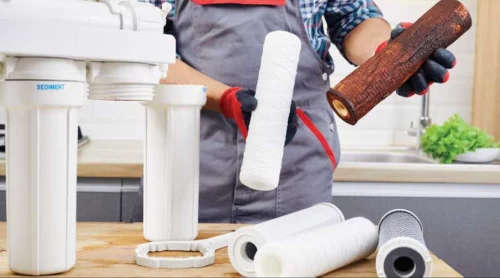
Sediment cartridges gradually accumulate particles, while activated carbon media eventually reach their treatment capacity.
Before purchasing a system, ask about replacement component costs, recommended servicing intervals, and ongoing maintenance requirements.
Centralized carbon filtration can also reduce disinfectant residuals, making appropriate sanitation and consistent maintenance particularly important.
Keep track of servicing dates and investigate unexpected changes in water pressure, taste, or appearance.
When addressing specific contaminants, appropriate follow-up testing provides more reliable evidence of treatment performance than appearance or flavor alone.
A little organization can make these responsibilities manageable without adding unnecessary stress to everyday life.
Investing in Better Water Where It Matters Most
For homeowners throughout Moorhead, Fargo, and surrounding communities, improving household water quality can begin with a thoughtful change near the main supply line.
Start with reliable water quality information, select equipment according to your property’s requirements, and establish a realistic maintenance routine.
The benefits may reveal themselves through ordinary moments — more pleasant showers, fewer visible particles around fixtures, and less frustration with recurring water quality problems.
Not every worthwhile home improvement needs to be visible. Sometimes, the greatest value comes from equipment quietly working behind the scenes.
Better household water begins long before you turn on a faucet. And giving that starting point some careful attention can make everyday living considerably more comfortable.